If your child wants to play in a band, clarinet and saxophone often end up on the shortlist. They look a little alike, they both use a reed, and they sit side by side in a wind band. So which one makes a better first instrument?
The short answer: both are good starting points, and neither is a wrong choice. The better question is which one suits your child's hands, age and personality right now. Here is what parents in Singapore should know before deciding.
How are the clarinet and saxophone alike?
Both are woodwind instruments, and both make their sound the same way. The player blows across a single cane reed, held against a mouthpiece, and the reed vibrates.
This surprises some parents, because the saxophone is made of metal. It still counts as a woodwind because of that reed and mouthpiece. It was invented by Adolphe Sax, who patented it in Paris in 1846.
Because the mouth shape and many fingerings are similar, a lot of players learn both over time. Many saxophone players also play clarinet.
What is different when you play them?
This is where the choice gets interesting.
Covering the holes. On a clarinet, some fingers press directly on open holes. Small fingers must seal each hole fully, or the note squeaks. On a saxophone, every hole is closed by a padded key, so the fingers press keys instead of covering holes.
Going up to higher notes. When a saxophone player presses the octave key, the same fingering plays a note one octave higher. So once a child learns the lower notes, the higher ones come with almost the same fingers. The clarinet works differently. Its higher register jumps further, so many higher notes need new fingerings. Crossing from the lower notes to the higher ones is a well known hurdle for young clarinettists.
Getting the first sound. In our experience, many children get their first clear note a little sooner on saxophone. Clarinet often takes a few more weeks to sound settled. Neither of these is a reason to avoid one instrument. They simply mean the first months feel different.
Does my child's age or size matter?
Yes, a little. Most beginners start on the B flat clarinet or the alto saxophone, which are the usual sizes for learners.
The clarinet is held in the hands. The alto saxophone is a bigger instrument, and most of its weight hangs from a neck strap. For a smaller child, the size and weight of a saxophone can be tiring at first.
That is why our guide to the best age to start a band instrument suggests the clarinet from about 7 or 8, as long as your child can cover the open holes fully and has settled front teeth. The saxophone is often a little later. Every child grows differently, so treat these as rough guides, not rules.
What does each one sound like in a band?
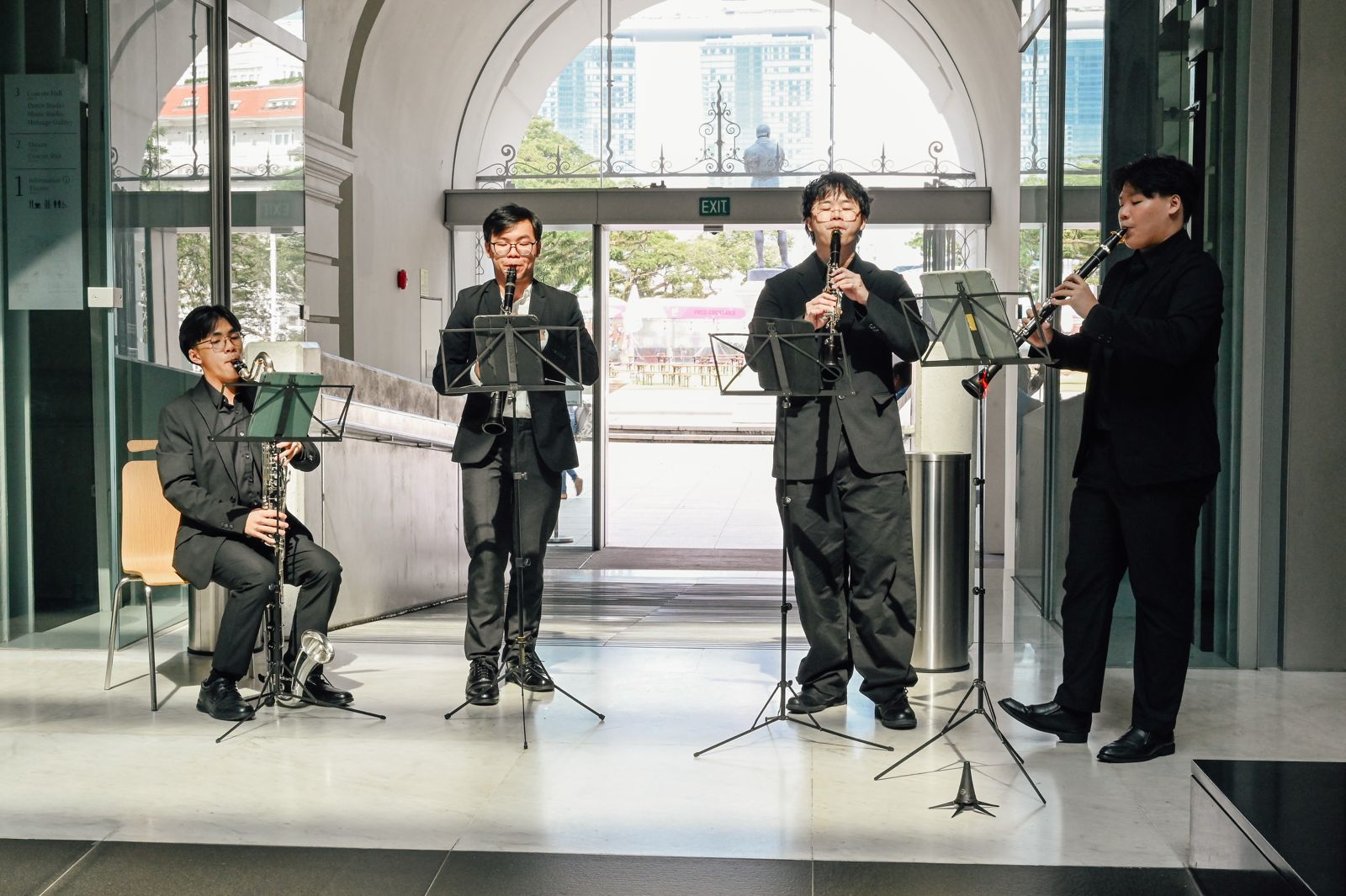
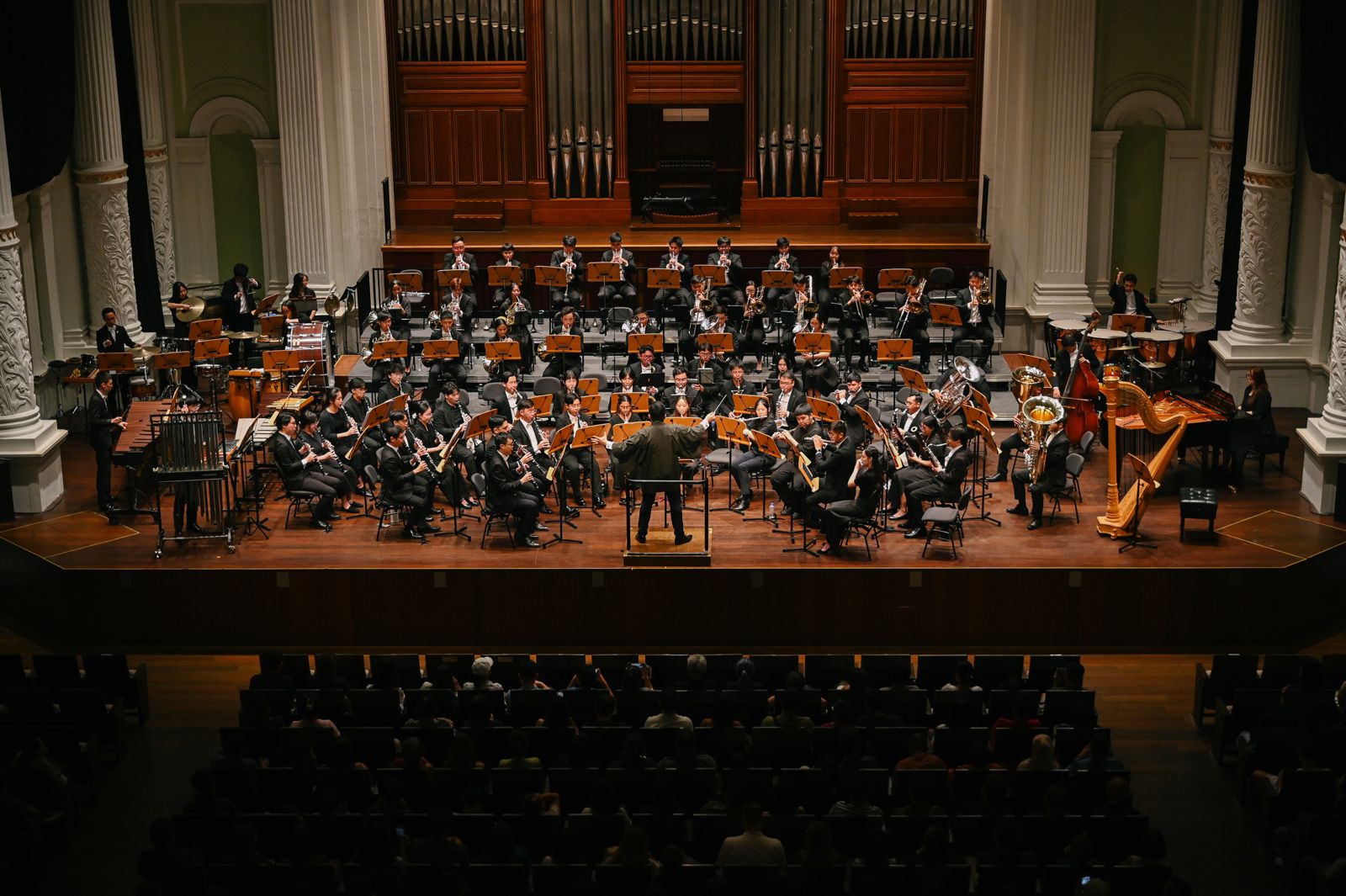
In a wind band, the clarinets are often a large section. They play many of the main tunes and are often compared to the strings of an orchestra. The clarinet also has the widest range of all the woodwinds, from deep low notes to bright high ones.
The saxophone section is usually smaller, with altos, a tenor and a baritone. Saxophones add warmth and colour, and they get some lovely solo moments. Many children already know the saxophone sound from pop and jazz.
Ask yourself what your child would enjoy. A child who likes being part of a big team, and who practises steadily, often enjoys the clarinet. A child who wants a bold sound and is not shy about being heard is often drawn to the saxophone.
Can my child switch later?
Yes. Because the two instruments share so much, moving from one to the other later is common. Clarinet players who move to saxophone usually settle in quickly.
Both instruments also have graded exams with ABRSM and Trinity, so progress can be measured either way.
So the first choice is not a lifetime decision. What matters most is that your child enjoys the instrument enough to keep practising.
How to decide: let your child try both
Reading about an instrument only goes so far. The best way to decide is to hold it, blow into it and hear the sound your child makes.
At BAS, every child in our Foundation Programme starts with an instrument try out. Our team watches how your child gets on and recommends an instrument that suits them. You do not need to buy an instrument first. Once we recommend one, we will tell you how to buy or rent it before lessons begin.
You can read more about each instrument on our clarinet lessons for kids and saxophone lessons for kids pages, or compare all the band instruments in our parent's guide to wind instruments.
Questions parents ask us
Is the saxophone easier than the clarinet for beginners?
Many children find the saxophone quicker to get a first sound on, and its higher notes use almost the same fingerings as the lower ones. The clarinet asks for more care at the start, because fingers must seal open holes. Both are very learnable for a child who practises regularly.
What age can my child start clarinet or saxophone?
Around 7 or 8 suits many children for the clarinet, once they can cover the holes and have settled front teeth. The saxophone is often a little later because of its size and weight. Our Foundation Programme is for children aged 7 and above.
Do we need to buy a clarinet or saxophone before the first lesson?
No. Your child tries the instruments first, and our team recommends one. After that, we tell you how to buy or rent it before lessons begin.