You have probably seen headlines saying music makes children smarter. Some of that is overstated. Some of it is well supported by good research.
As a music educator and a parent, I think families deserve the honest picture. Here is what learning an instrument does for a child, and what the evidence says.
It changes how the brain develops
This one has solid research behind it.
In 2009, a team led by Krista Hyde published a study in the Journal of Neuroscience called "Musical Training Shapes Structural Brain Development." They followed children aged around six. One group had weekly half hour keyboard lessons for 15 months. The other group did not.
After 15 months, the children who had lessons showed measurable structural changes in areas of the brain linked to movement and hearing, and those changes matched improvements in their musical skills.
It was a small study and it used keyboard, not band instruments. But it was one of the first to show that learning an instrument physically shapes a young brain, not just that musical children happen to be different to begin with.
It is linked with better school results
In 2020, the Journal of Educational Psychology published a study of the school records of more than 112,000 secondary students in British Columbia, Canada.
Students who took school music did better in maths, science and English exams than those who did not. The link was clearly stronger for instrumental music than for singing. The most engaged instrumental students were, on average, about a year ahead of their peers academically.
The researchers were careful to say this shows a strong link rather than proof that music caused the difference. Still, it is a very large study, and it lines up with what many teachers see.
It builds focus and memory
Playing an instrument means doing several things at once. Reading the notes, counting the rhythm, moving your fingers, controlling your breath, listening to yourself. In a band you also have to watch the conductor and listen to everyone around you.
That kind of juggling trains concentration. Children who practise regularly get used to holding their attention on one thing for a stretch of time, which helps with homework and exams.
It teaches patience and discipline
Nobody sounds good on an instrument in the first week. Progress comes from small, steady effort over months. Children learn that practice works, that difficult passages get easier, and that effort today pays off later.
That lesson is worth a lot. It is hard to teach any other way.
It gives children an outlet
Music gives children a way to express feelings they may not have words for. Many young players say that practising calms them down after a busy school day. Performing, and getting through it, builds confidence.
Group music builds social skills
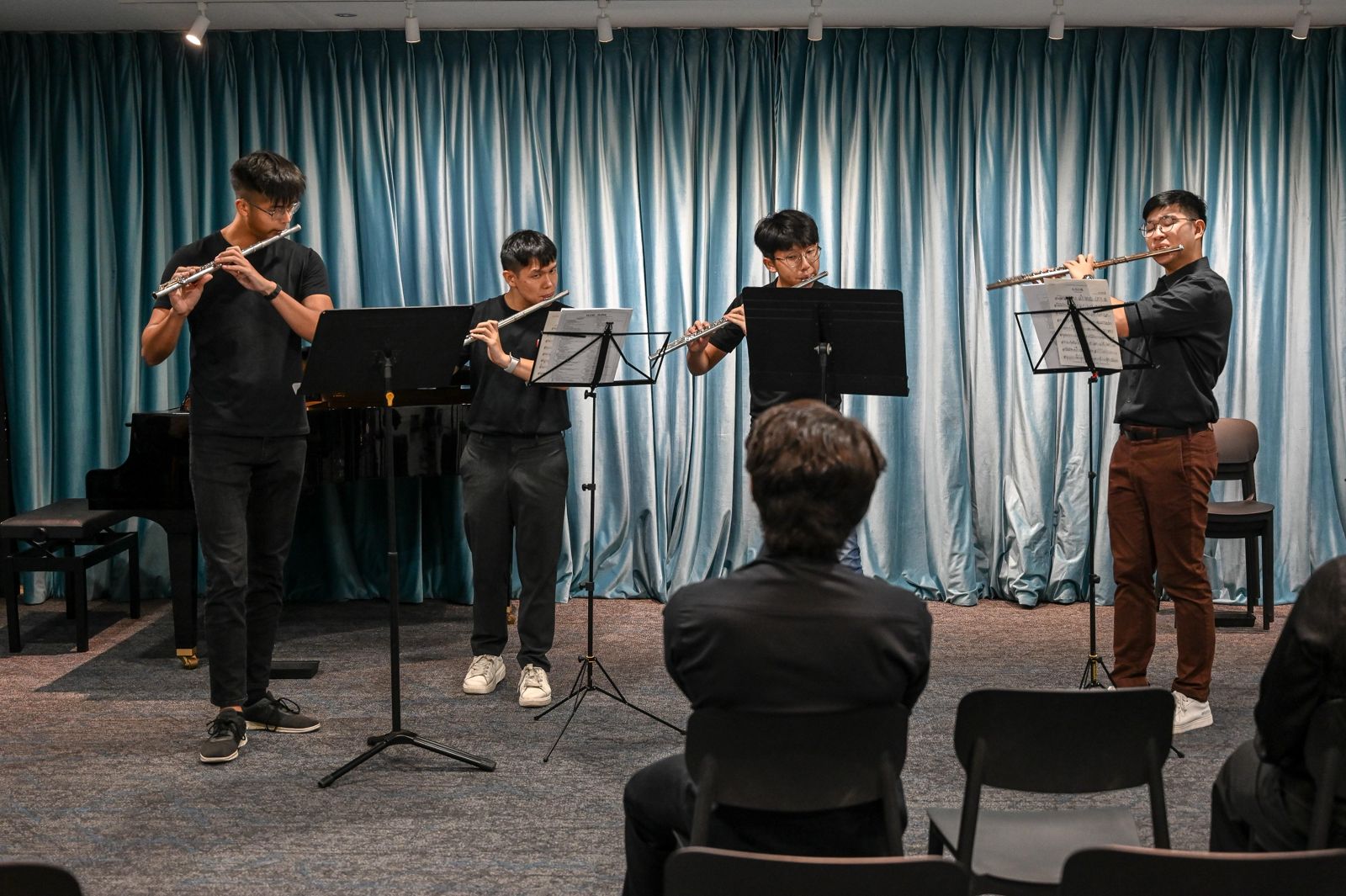
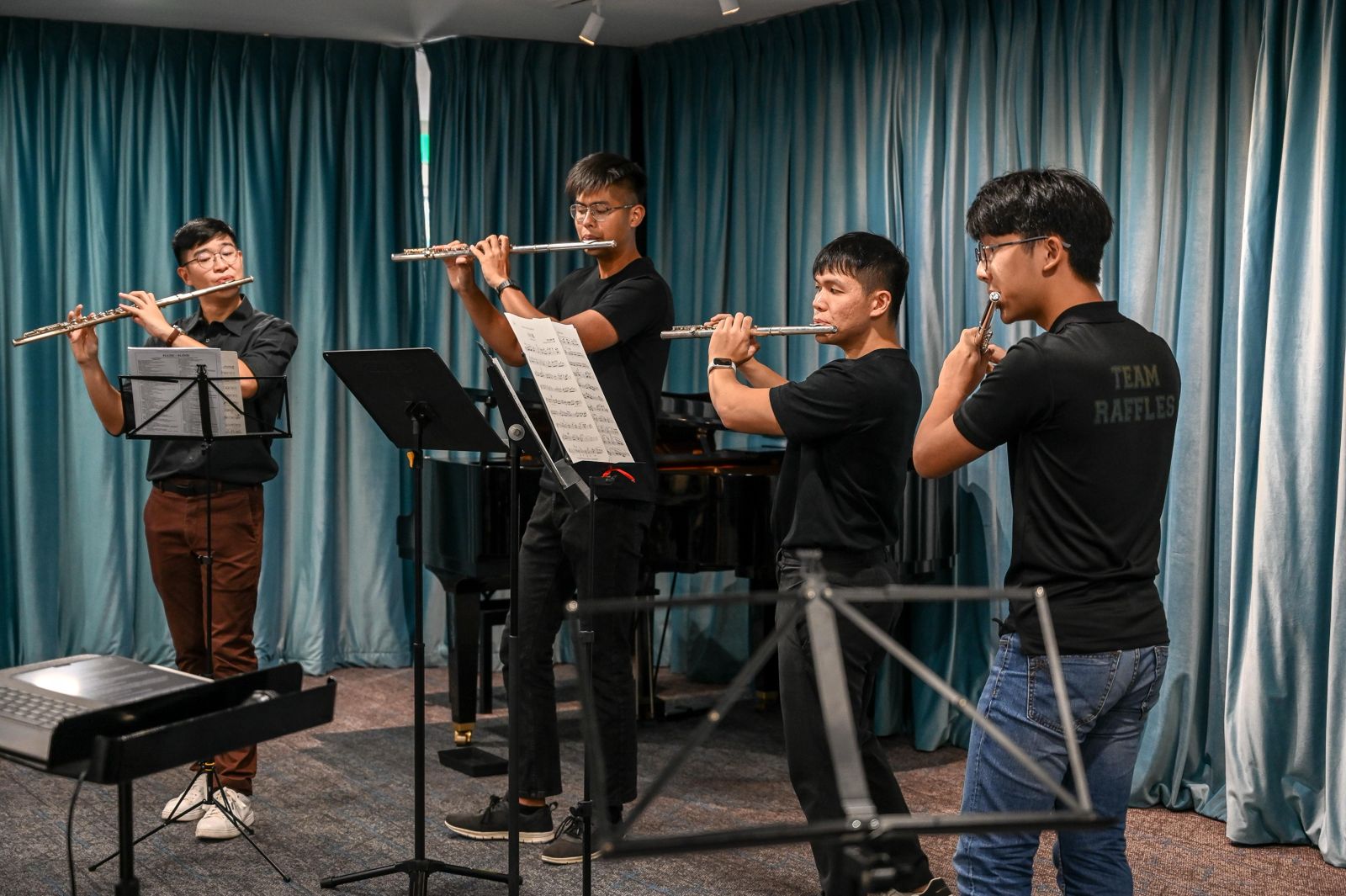
Playing in a band or ensemble adds another layer. Children learn to listen, to take turns leading and following, and to understand that their part matters to the group. They also make friends who share the same goal, which is one of the strongest reasons children stay with music.
It builds coordination
Fingers, breath, tongue, eyes and ears all have to work together. Percussionists in particular develop very precise coordination. Different instruments stretch the body in different ways.
Starting young helps, but it is never too late
The early childhood years are when the brain is changing fastest, so starting early has advantages. But children who start at 10, 12 or older often progress very quickly because they can focus for longer and understand instructions better.
What this means for children in Singapore
Every child in Singapore already meets music in school. MOE's music syllabus runs through primary and lower secondary, so most children learn to sing, listen and play simple instruments in class. Learning an instrument properly takes that much further.
It matters later too. A CCA is compulsory for all secondary school students, and many secondary schools run a concert band. A child who already plays a band instrument joins with a head start, and some go on to use it for DSA music.
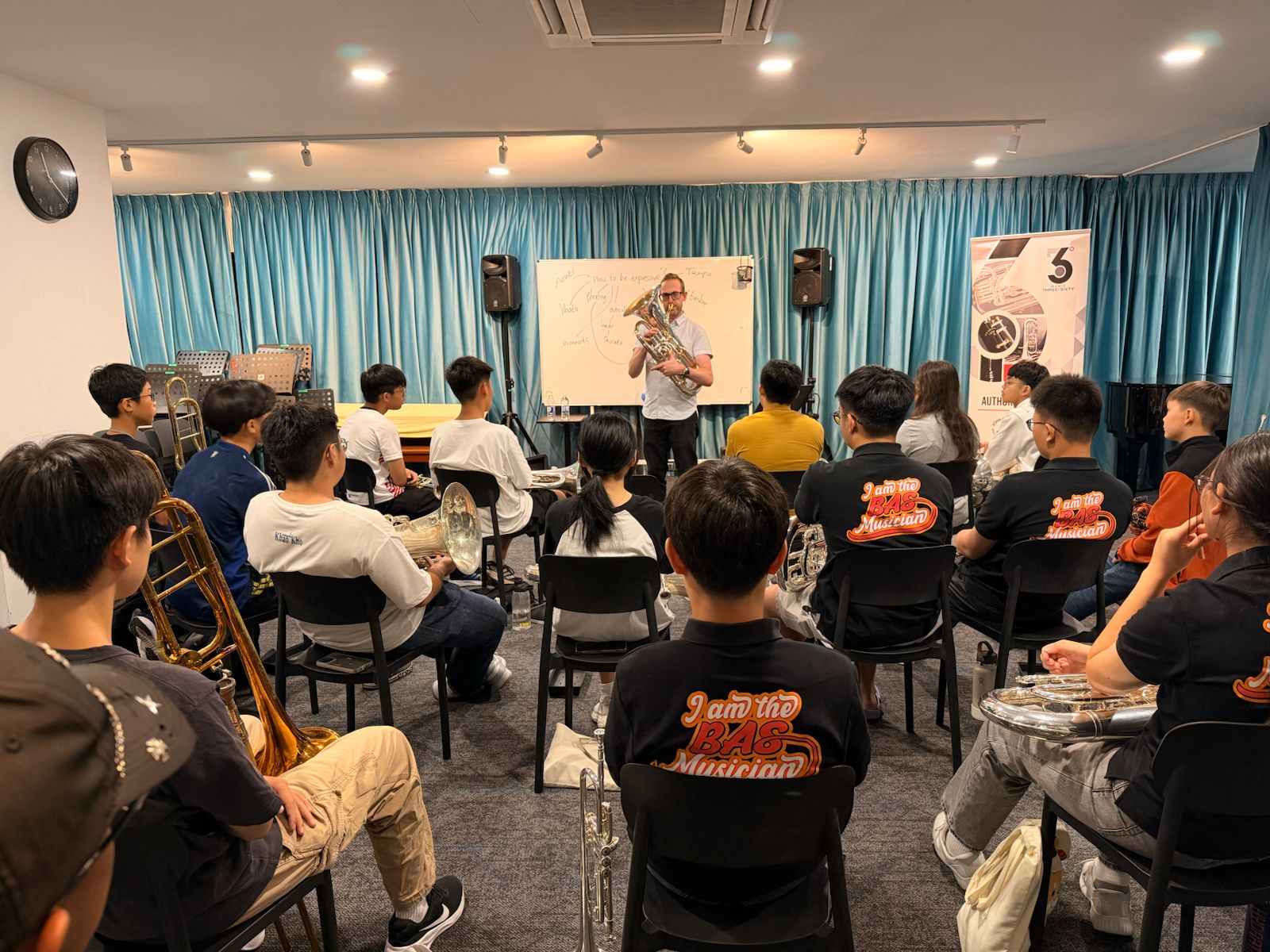
If you are not sure where to begin, our beginner band classes let children try an instrument and play with others from the first term.
The short version
Learning an instrument will not turn every child into a top scorer, and anyone who promises that is overselling. What it reliably does is build focus, discipline, confidence and coordination, and there is good evidence of real benefits for the brain and for school. For children who learn in a group, add teamwork and friendship.
That is a lot to gain from something children often come to love.
Sources
- Hyde, K. L. and others (2009). Musical Training Shapes Structural Brain Development. Journal of Neuroscience, 29(10), 3019.
- Guhn, M., Emerson, S. D. and Gouzouasis, P. (2020). A Population Level Analysis of Associations Between School Music Participation and Academic Achievement. Journal of Educational Psychology, 112(2).
- Ministry of Education Singapore. 2023 Primary and Lower Secondary Music Syllabus.
- Ministry of Education Singapore. Overview of co-curricular activities (CCA).
Questions parents ask us
Will learning music make my child smarter?
Be careful with anyone who promises that. Research does link music training with changes in the brain and with better school results, but most studies show a connection rather than proof that music caused it. What is clear is that learning an instrument builds focus, memory and discipline, and those help everywhere.
What is the best age to start an instrument?
Many children start around 6 to 8. Starting early helps, but it is never too late. Children who start at 10 or 12 often progress quickly because they can focus for longer.
Is listening to music as good as playing?
No. Studies consistently find that actively learning and playing an instrument has a stronger effect than listening alone.